


Silica, Crystalline
Construction
OSHA's Respirable Crystalline Silica standard for construction requires employers to limit worker exposures to respirable crystalline silica and to take other steps to protect workers.
The standard provides flexible alternatives, which OSHA expects will be especially useful for small employers. Employers can either use the control methods laid out in Table 1 of the construction standard, or they can measure workers' exposure to silica and independently decide which dust controls work best to limit exposures to the PEL in their workplaces.
Regardless of which exposure control method is used, all construction employers covered by the standard are required to:
- Establish and implement a written exposure control plan that identifies tasks that involve exposure and methods used to protect workers, including procedures to restrict access to work areas where high exposures may occur.
- Designate a competent person to implement the written exposure control plan.
- Restrict housekeeping practices that expose workers to silica where feasible alternatives are available.
- Offer medical exams-including chest X-rays and lung function tests-every three years for workers who are required by the standard to wear a respirator for 30 or more days per year.
- Train workers on work operations that result in silica exposure and ways to limit exposure.
- Keep records of exposure measurements, objective data, and medical exams.
Construction employers must comply with all requirements of the standard by September 23, 2017, except requirements for laboratory evaluation of exposure samples, which begin on June 23, 2018.
Construction Outreach Materials
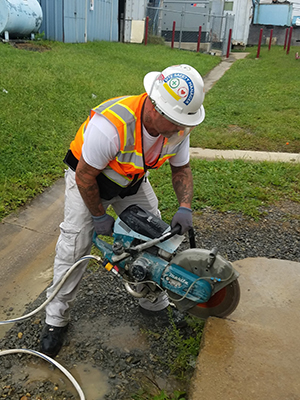
Applying water to a saw blade when cutting materials that contain crystalline silica — such as stone, rock, concrete, brick, and block — substantially reduces the amount of dust created during these operations.
- OSHA Small Entity Compliance Guide for Construction. Discusses suggested engineering and work practice controls, exposure assessments, respirator use, medical surveillance, written exposure control plans, and other aspects of compliance.
- Sample Training PowerPoint for Construction. Provides a customizable PowerPoint for employers and other instructors to tailor their training on how to comply with OSHA’s respirable crystalline silica standard for construction.
- OSHA's Crystalline Silica Rule: Construction. (Español). Provides a summary of the requirements of the respirable crystalline silica standard for construction.
Controlling Silica Dust in Construction Fact Sheets for Table 1 Tasks
- Handheld Power Saws Fact Sheet (Español)
- Handheld Grinders for Tasks Other Than Mortar Removal Fact Sheet (Español)
- Handheld Power Saws Used to Cut Fiber-Cement Board (Español)
- Jackhammers or Handheld Powered Chipping Tools Fact Sheet (Español)
- Handheld and Stand-Mounted Drills Fact Sheet (Español)
- Stationary Masonry Saws Fact Sheet (Español)
- Handheld Grinders for Mortar Removal (Tuckpointing) Fact Sheet (Español)
- Walk-Behind Saws Fact Sheet (Español)
- Drivable Saws Fact Sheet (Español)
- Rig-Mounted Core Saws or Drills Fact Sheet (Español)
- Dowel Drilling Rigs for Concrete Fact Sheet (Español)
- Vehicle-Mounted Drilling Rigs for Rock and Concrete Fact Sheet (Español)
- Walk-Behind Milling Machines and Floor Grinders Fact Sheet (Español)
- Small Drivable Milling Machines (Less than Half Lane) Fact Sheet (Español)
- Large Drivable Milling Machines (Half Lane and Larger) Fact Sheet (Español)
- Crushing Machines Fact Sheet (Español)
- Heavy Equipment and Utility Vehicles Used During Demolition Activities Fact Sheet (Español)
- Heavy Equipment and Utility Vehicles Used for Grading and Excavating Tasks Fact Sheet (Español)
Controlling Silica Dust in Construction Videos for Table 1 Tasks
Stationary Masonry Saws
Handheld Power Saws
Handheld and Stand-Mounted Drills
Jackhammers or Handheld Powered Chipping Tools
Handheld Grinders for Mortar Removal (Tuckpointing)
Handheld Grinders for Uses Other than Mortar Removal
OSHA Standards, Interpretations, and Directives
Construction Industry (29 CFR 1926)
- 1926 Subpart Z, Toxic and Hazardous Substances
- 1926.1153. Respirable Crystalline Silica
- Appendix A, Methods of Sample Analysis
- Appendix B, Medical Surveillance Guidelines
- 1926.1153. Respirable Crystalline Silica
- Federal Register Notice
OSHA Directives
- National Emphasis Program – Respirable Crystalline Silica
- Inspection Procedures for the Respirable Crystalline Silica Standards
- Search all available directives.
Standard Interpretations
- Search all available standard interpretations.
Frequently Asked Questions
- Search all available frequently asked questions (FAQs) for the silica rule.
State Standards
State Plans are OSHA-approved workplace safety and health programs operated by individual states or U.S. territories. Most State Plans cover both private sector and state and local government workers throughout the state, while several cover only state and local government workers. See a complete listing of all State Plans. State Plans are required to have standards and enforcement programs that are at least as effective as OSHA's and may have different or more stringent requirements. Explore specific State Plan safety and health standards and regulations.
Resources for the Construction Industry
- Silica. National Institute for Occupational Safety and Health (NIOSH) Safety and Health Topic. Provides information about silica as well as links to related publications and references.
- NIOSH Silica Controls for Construction Page
- Control of Hazardous Dust during Tuckpointing. U.S. Department of Health and Human Services (DHHS), National Institute for Occupational Safety and Health (NIOSH) Publication No. 2008-126, (September 2008).
- Silicosis in Sandblasters: A Case Study Adapted for Use in U.S. High Schools. U.S. Department of Health and Human Services (DHHS), National Institute for Occupational Safety and Health (NIOSH) Publication No. 2002-105, (June 2002). Provides a case study developed for use in teaching epidemiology to high school students. Includes basic information about the disease silicosis, potential routes of exposure to silica, and controls.
- Working Safely with Silica. The Center for Construction Research and Training (also known as CPWR) has a website with resources to help contractors and workers understand the health risk involved and implement measures to control dust.
- Silica and Road Construction: Silicosis. New York Department of Health document addressing silica dangers in road construction.
- OSHA Clinicians page. The page provides information for clinicians to understand important ethical, regulatory, and clinical issues.
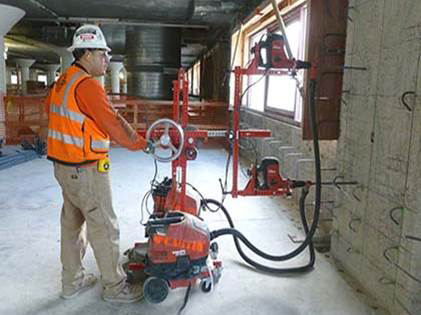
Contractors adopt innovative concrete drill jig to reduce silica exposures during concrete drilling operations. Read more.