
U.S. flag

An official website of the United States government.

Here’s how you know

Dot gov

The .gov means it’s official.
Federal government websites often end in .gov or .mil. Before sharing sensitive information, make sure you’re on a federal government site.

Https

The site is secure.
The https:// ensures that you are connecting to the official website and that any information you provide is encrypted and transmitted securely.

United States Department of Labor
U.S. Department of Labor

Occupational Safety and Health Administration

Contact UsFAQA to Z Index
Languages
  • اَلْعَرَبِيَّةُ (Arabic)
  • Sinugbuanong Binisayâ (Cebuano)
  • 简体字 (Chinese-Simplified)
  • 繁体字 (Chinese-Traditional)
  • English
  • Français (French)
  • Kreyòl ayisyen (Haitian Creole)
  • 한국어 (Korean)
  • नेपाली (Nepali)
  • Polski (Polish)
  • Português (Portuguese (Brazilian))
  • Русский (Russian)
  • Af-Soomaali (Somali)
  • Español (Spanish)
  • Українська (Ukrainian)
  • Tiếng Việt (Vietnamese)
  • OSHA Back
    • OSHA
    • About OSHA
    • Find an OSHA Office
    • State Plans
    • Job Safety and Health Poster
    • Careers
    • Freedom of Information Act
    • Speaker Requests
  • Standards Back
    • Standards
    • Law and Regulations
    • Federal Registers
    • Open for Comment
    • Regulatory Agenda
    • Letters of Interpretation
    • Training Requirements by Standard
  • Enforcement Back
    • Enforcement
    • OSHA Enforcement
    • Whistleblower Protection Program
    • Annual Inspection Data
  • Topics Back
      • Topics
      • For Employers
      • Worker Rights
      • Workers Memorial
      • Fall Prevention
      • Hazard Communication
      • Heat
      • Personal Protective Equipment
      • Suicide Prevention
      • Trenching and Excavation
      • By Sector
      • Agriculture
      • Construction
      • Federal Agencies
      • Healthcare
      • Maritime
      • Oil and Gas
      • Warehousing
      • Key Topics
      • Recordkeeping Requirements and Forms
      • Safety and Health Programs
      • Support After a Loss
      • Whistleblower Protections
  • HELP AND RESOURCES Back
      • Help and Resources
      • Data
      • Establishment Search
      • Fatality Reports
      • File a Complaint
      • Freedom of Information Act (FOIA)
      • Publications
      • Safety and Health Topics Pages
      • Videos
      • Compliance Assistance
      • Compliance Assistance Specialists
      • Consultation Services
      • Cooperative Programs
      • Small Business Resources
      • Training
      • Training Requirements and Resources
      • Outreach Training Program (10- and 30-hour Cards)
      • Find a Trainer
      • Replace a Card
      • Avoid Card Fraud
      • OSHA Training Institute Education Centers
      • Find a Center
      • Search for Classes
      • Susan Harwood Training Grants
  • NEWS Back
    • News
    • Federal Registers
    • Media Center
    • News Releases
    • QuickTakes Newsletter
    • Información Rápida
  • Contact Us
  • FAQ
  • A to Z Index
Languages
  • اَلْعَرَبِيَّةُ (Arabic)
  • Sinugbuanong Binisayâ (Cebuano)
  • 简体字 (Chinese-Simplified)
  • 繁体字 (Chinese-Traditional)
  • English
  • Français (French)
  • Kreyòl ayisyen (Haitian Creole)
  • 한국어 (Korean)
  • नेपाली (Nepali)
  • Polski (Polish)
  • Português (Portuguese (Brazilian))
  • Русский (Russian)
  • Af-Soomaali (Somali)
  • Español (Spanish)
  • Українська (Ukrainian)
  • Tiếng Việt (Vietnamese)
  • Home
  • QuickTakes
  • June 05, 2026
June 5, 2026
Quicktakes: Did You Know? English/Español

Did You Know?

Hydrogen sulfide (also known as H2S and sewer gas) is a colorless gas known for its powerful "rotten egg" odor. It is extremely flammable and highly toxic. Used or produced in a number of industries, hydrogen sulfide also occurs naturally in sewers, manure pits, well water, and oil and gas wells. Because it is heavier than air, it can collect in low-lying or enclosed spaces, such as manholes, sewers, and underground telephone vaults. Even low levels can cause health hazards and make working in confined spaces potentially very dangerous. Symptoms can range from headaches or eye irritation, to unconsciousness and death. It can also cause an explosion if exposed to a spark, flame, or other ignition source.

To protect workers:

  • Evaluate exposure to know whether H2S gas is present and at what levels.
  • Eliminate the source of hydrogen sulfide whenever possible.
  • If the source cannot be eliminated, control exposures through engineering controls (first line of defense) or administrative controls and safe work practices to reduce exposures to safe levels.
  • Use personal protective equipment if engineering controls and work practices alone cannot reduce hydrogen sulfide to safe levels.

Visit our website for more information on how hydrogen sulfide can affect your health, and how to prevent harmful exposures.

¿Sabías?

El sulfuro de hidrógeno (también conocido como H2S y gas de alcantarilla) es un gas incoloro conocido por su potente olor a “huevo podrido”. Es extremadamente inflamable y altamente tóxico. Utilizado o producido en diversas industrias, el sulfuro de hidrógeno también se encuentra de forma natural en alcantarillas, fosas de estiércol, agua de pozo y pozos de petróleo y gas. Debido a que es más pesado que el aire, puede acumularse en áreas bajas o espacios cerrados, como pozos de registro, alcantarillas y cámaras subterráneas de telefonía. Incluso niveles bajos pueden causar riesgos para la salud y hacer que el trabajo en espacios confinados sea potencialmente muy peligroso. Los síntomas pueden variar desde dolores de cabeza o irritación ocular hasta la pérdida del conocimiento y la muerte. También puede causar una explosión si se expone a una chispa, una llama u otra fuente de ignición.

Para proteger a los trabajadores:

  • Evalúe la exposición para saber si el gas H2S está presente y en qué niveles.
  • Elimine la fuente de sulfuro de hidrógeno siempre que sea posible.
  • Si la fuente no puede eliminarse, use controles de ingeniería (primera línea de defensa) o controles administrativos y prácticas seguras de trabajo para reducir las exposiciones a niveles seguros.
  • Use equipo de protección personal si los controles de ingeniería y las prácticas de trabajo por sí solos no pueden reducir el sulfuro de hidrógeno a niveles seguros.

Visite nuestro sitio web para obtener más información sobre cómo el sulfuro de hidrógeno puede afectar su salud y cómo prevenir exposiciones perjudiciales.
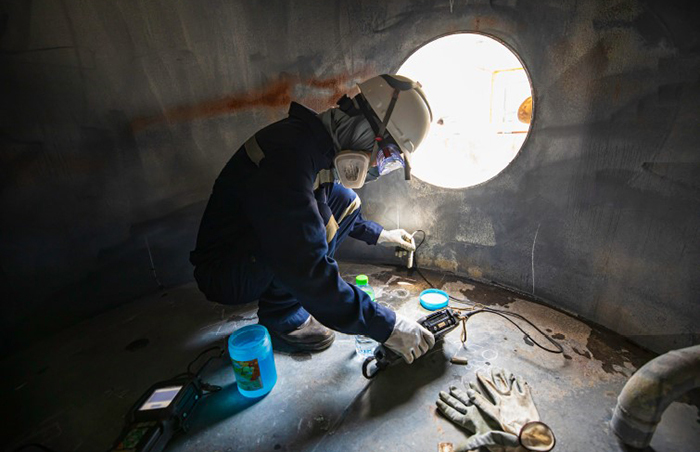
Evaluate exposure to know whether hydrogen sulfide gas is present and at what levels.


"Did You Know?" messages are issued on occasion to subscribers of QuickTakes and Información Rápida.


QuickTakes is emailed free twice monthly to subscribers. You can receive it faster and easier by subscribing to the RSS Feed iconRSS feed that delivers almost instant information. Visit OSHA's RSS Feeds webpage to subscribe.

Scroll to Top
  • OSHA
  • Standards
  • Enforcement
  • Topics
  • Media Center
  • Contact Us
United States Department of Labor
U.S. Department of Labor

Occupational Safety and Health Administration
200 Constitution Ave NW
Washington, DC 20210
1-800-321-OSHA
1-800-321-6742
www.osha.gov

Federal Government
  • White House
  • Disaster Recovery Assistance
  • DisasterAssistance.gov
  • USA.gov
  • No Fear Act Data
  • U.S. Office of Special Counsel
Occupational Safety & Health
  • Frequently Asked Questions
  • A - Z Index
  • Freedom of Information Act - OSHA
  • Read The OSHA Newsletter
  • Subscribe to the OSHA Newsletter
  • OSHA Publications
  • Office of Inspector General
ABOUT THE SITE
  • Freedom of Information Act
  • Disclaimers
  • Plug-ins Used on DOL.gov
  • Accessibility Statement
  • Privacy & Security Statement
  • Important Website Notices
  • Site Map

Connect With OSHA

Facebook X Instagram Youtube Linkedin
Site Map Important Website Notices Privacy & Security Statement