


QuickTakes Newsletter
February 27, 2026
SOWING SAFETY REAPS REWARDS
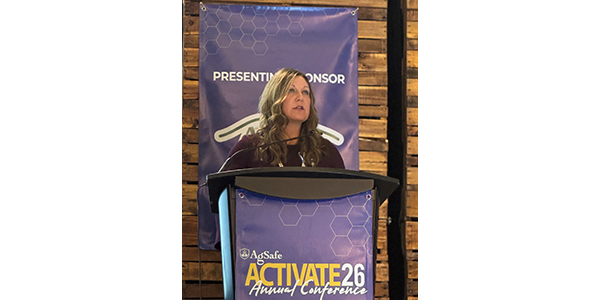
OSHA Deputy Assistant Secretary Amanda Wood Laihow addressed attendees of the AgSafe Activate26 conference this month to share the agencies priorities and initiatives to protect America's workers.
Speaking to industry leaders, Laihow emphasized OSHA's commitment to collaboration and compliance assistance to help businesses create safer workplaces.
We are doing that by expanding our compliance assistance outreach through initiatives such as our Safety Champions Program; it meets employers where they are to make it easier for them to progress along a pathway of continual improvement to find and fix hazards before they cause an injury, illness, or fatality.
Laihow highlighted several tools designed to help employers who want to protect their workers but, may also, need help understanding how to comply with OSHA standards. One key resource is our Letters of Interpretation written by subject matter experts in response to questions from employers, employees, or other parties, who want clarification about how OSHA regulations apply in specific workplace situations. These letters are posted to our website so that others can stay in compliance.
"For years OSHA has been seen as only enforcement, citations and fines," Laihow said. "But that perception misses the big picture. We're working to change that mindset. Our goal isn't to catch people doing something wrong; it's to help them get it right."
GO HOME SAFE
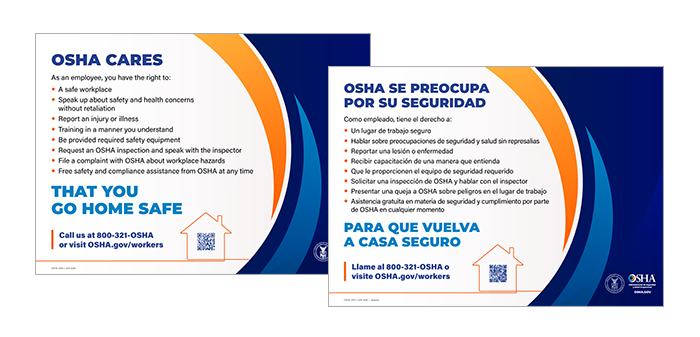
We want every worker to know that OSHA cares about their wellbeing. We’re here to help ensure that they go home safe at the end of every day — whether by addressing concerns, providing helpful resources, or working with employers to improve workplace safety. The poster that all employers covered by OSHA are required to display in their place of business is meant to remind workers that we are here for them. You can download or order the poster on our website. Employers may choose to use this new version or continue using the prior version they already have on display.
SIMPLE SOLUTIONS TO KNOWN HAZARDS
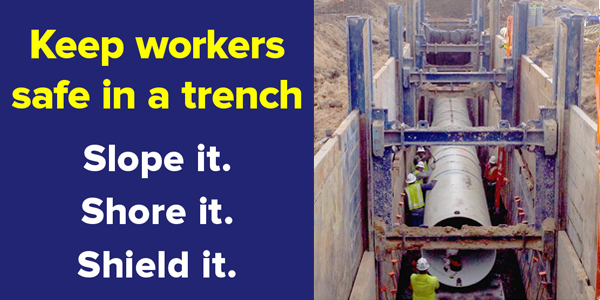
Workers continue to be injured or killed every year from well-known and preventable hazards. Recently, during a one-week period, six workers across the Midwest lost their lives in trenches that weren’t properly secured to prevent them from collapsing. Each of these tragedies could have been avoided by following long-established and proven safety measures. That is why OSHA is focused on raising awareness, promoting compliance with standards, and reinforcing the use of protective measures on construction sites. Visit our website to learn more about improving safety in trenching and excavation work.
DATES TO REMEMBER

February 1 - April 30: Employers must keep their 300A summary of workplace injuries and illnesses recorded in 2025 posted where it will be visible to all employees.
March 2: The deadline for covered employers to submit calendar year 2025 injury and illness data through the Injury Tracking Application (ITA).
March 16-19: Pacific Coast Safety Fest live virtual safety and health training event.
March 30-April 3: Stand Up 4 Grain Safety
April 23 at 1:00 p.m. ET: Workers Memorial Day Ceremonies
April 23, 7:00 p.m. ET: Workers Memorial Candlelight Vigil
Do you have a public safety and health event, training, or webinar that you’d like to have featured in QuickTakes. Please share event information with us including the date, time, location, and short description.
BATTERY DOS AND DON’TS
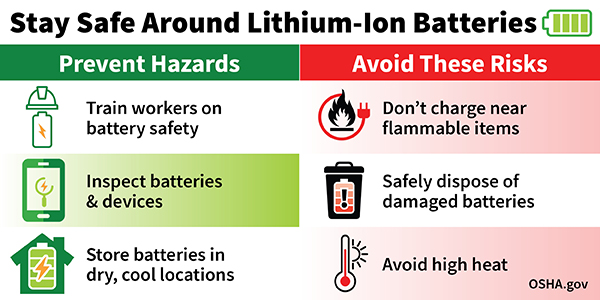
Stay Safe Around Lithium-Ion Batteries
Prevent Hazards
Train workers on battery safety
Inspect batteries & devices
Store batteries in dry, cool locations
Avoid These Risks
Don’t charge near flammable items
Safely dispose of damaged batteries
Avoid high heat
OSHA.gov
WE WANT YOU TO HEAR THIS
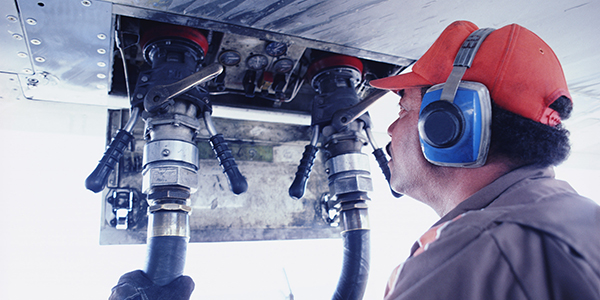
Airport runways and construction sites aren’t the only workplaces that can potentially cause permanent hearing loss to the people who work there. Exposure to the sounds of factory floors, agricultural equipment, and music venues are among the many occupational sources of loud noises that can damage hearing. While earplugs or earmuffs help reduce risk and may be required, finding the best fit for you and your specific working conditions is essential for effective protection. Although OSHA does not require hearing protector fit testing, it is a critical advancement in workplace hearing conservation and can be a valuable training tool for workers. Read our new safety and health bulletin to learn more.
FLIGHT PLAN FOR SAFETY
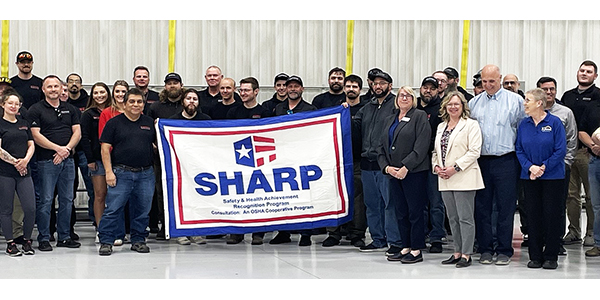
A family-owned aviation operation in Kansas collaborated with the state’s On-Site Consultation Program to make continuous improvements to their safety and health program. The company received Safety and Health Achievement Recognition Program status last year in recognition of implementing new programs to enhance workplace safety and efficiency, improving documentation, and emphasizing employee involvement to foster a culture of safety among both managers and workers. Learn more about our On-site Consultation Program on our website.
SAFETY AT EVERY LEVEL
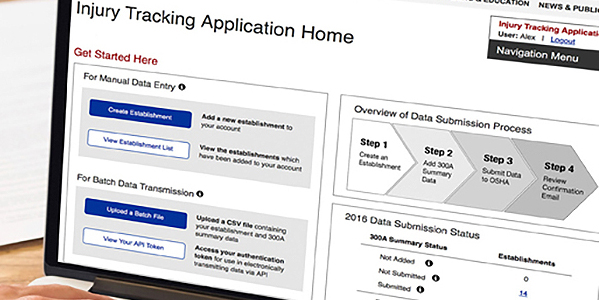
OSHA's recording and reporting requirements provide information that is important in evaluating the safety and health of a workplace, understanding industry hazards, and implementing worker protections to reduce and eliminate workplace hazards. Ultimately, this helps us all achieve our shared goal of ensuring that every worker goes home safely. That is why it is important for 2025 injury and illness data to be entered into OSHA's Injury Tracking Application by the March 2 deadline. You are not simply complying with a regulation, you are helping to prevent future workplace injuries, illnesses, and fatalities.
YOU ASK...WE ANSWER

Q: Is it ever okay to work on live electrical parts?
It's only acceptable to work on live (energized) electrical parts when ALL of the following are true:
-
De-energizing creates a greater hazard – For example, turning off power would stop critical systems and create a higher risk.
-
You are a qualified worker and have the proper training and knowledge to work safely on energized equipment.
-
The proper PPE and tools are used such as insulated gloves, tools, arc-rated clothing, face shields, and other required protection are in place.
-
You and your team follow OSHA procedures that requires a documented plan, hazard analysis, and adherence to safe work practices (29 CFR 1910.333).
💡 Rule of thumb: Always de-energize first. Working live is the exception, not the rule. Visit our website for more electrical safety information.
WHAT’S TRENDING
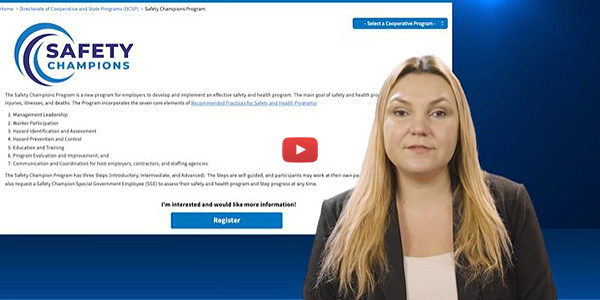
Have a minute? Watch this short video to hear about our Safety Champions program. You can also visit our website to register for informational sessions that will provide more details.
We appreciate your commitment to keeping informed about that affect the safety and health of America's workers.


Occupational Safety and Health Administration
200 Constitution Ave. NW, Washington, DC 20210
202-693-1999
You can unsubscribe from this list. (We will miss you!)
QuickTakes subscribers occasionally receive DYK? bulletins about a single timely topic, resource or upcoming event.